
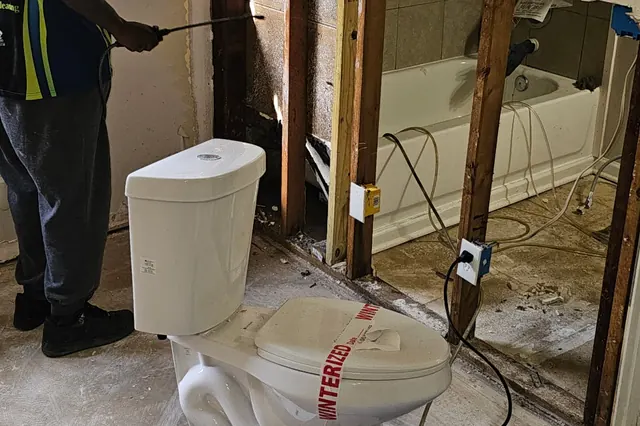
Water Damage Mitigation
24/7 water extraction and drying that stops wet floors and walls from turning into mold.
Learn more →Air Quality Guide · November 14, 2026
A ceiling stain or drip means water is already sitting above you. Here is what to do in the next hour, how to find the source and when to call for help.
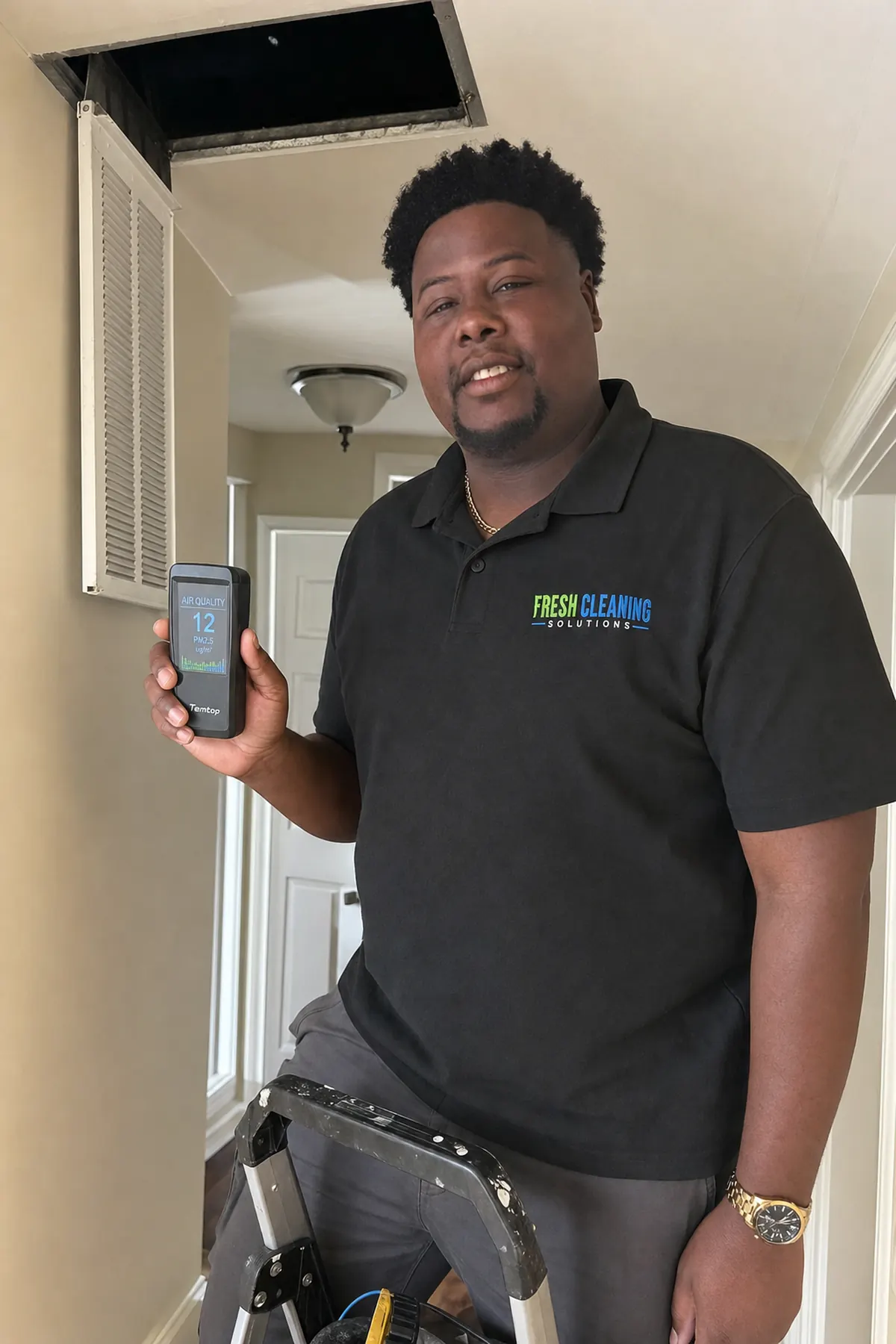
By David ThrowerOwner, Fresh Cleaning Solutions · NADCA certified · Suwanee, GA since 2016

Key Takeaways
For water damage on the ceiling, stop the water first, cut power to that room, protect what is underneath and start drying within 24 to 48 hours. A stain that is still growing means water is still coming in, so finding the source matters more than painting over the spot.
Water problems are common enough that insurers track them closely. The Insurance Information Institute (Triple-I) reports in Facts + Statistics: Homeowners and renters insurance that about one in 60 insured homes has a property damage claim caused by water damage or freezing each year, based on 2018 to 2020 data. In 2023, water damage and freezing made up 22.6 percent of homeowners insurance losses.
Start with the complete guide: mold in your house, how to spot it, test it and get rid of it.
Yes, because the damage you see is usually the smallest part. In its guide A Brief Guide to Mold, Moisture and Your Home, the U.S. Environmental Protection Agency says it is important to dry water-damaged areas and items within 24 to 48 hours to prevent mold growth. The same guide notes that roof leaks can let mold grow above ceilings, where it is hard to see.
The EPA's Mold Remediation in Schools and Commercial Buildings Guide: Chapter 4 gives a clear table for what to do with wet materials in that window. It is written for larger buildings, but the materials are the same ones above your living room.
| Material | EPA recommended action after water damage |
|---|---|
| Drywall (wallboard) | May be dried in place if there is no obvious swelling and the seams are intact. If not, remove, discard and replace |
| Ceiling tiles | Discard and replace |
| Fiberglass or cellulose insulation | Discard and replace |
| Carpet and backing | Extract water, then dry with fans and a dehumidifier within 24 to 48 hours |
That table explains why a ceiling that "looks dry" after a day can still be a problem. The paint dries first. The insulation lying on top of the drywall stays soaked, holds water against the back of the ceiling and keeps the framing wet. Unless someone checks above the ceiling with a moisture meter or opens it up, you are guessing.
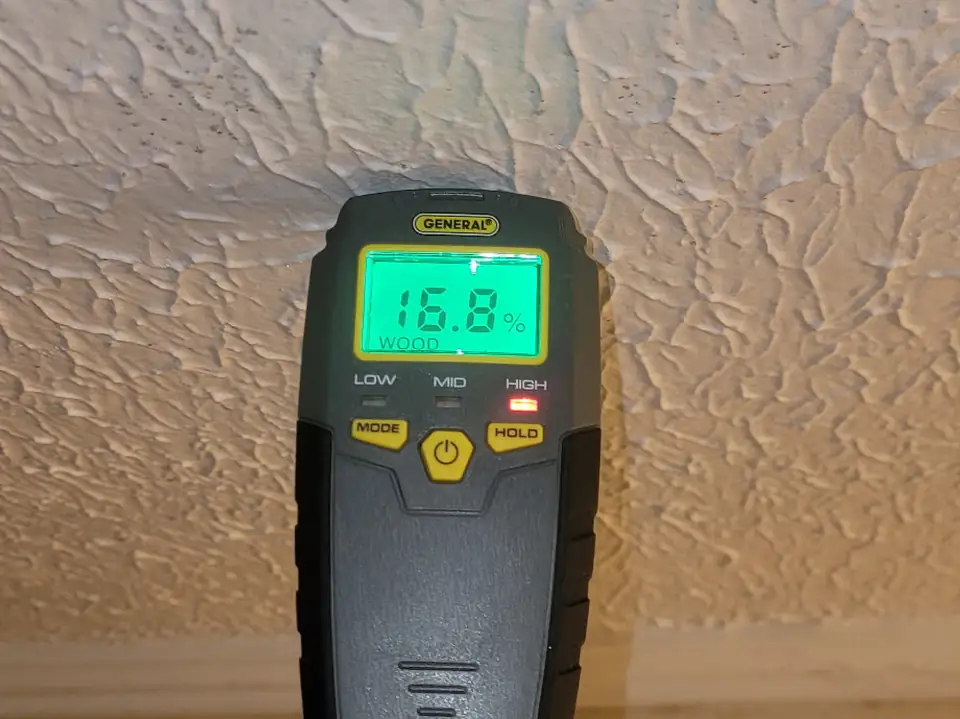
A stain that dries out and leaves a ring is not proof the leak is gone. Many leaks only show up when it rains hard or when one shower runs long. If the stain comes back or a musty smell starts, treat it as an active leak.
Bathroom leaks are some of the most common ceiling stains in two-story homes, and the EPA's advice is simple: fix plumbing leaks and other water problems as soon as possible. The usual suspects, from most to least obvious:
If the stain is on a top-floor ceiling, look up instead of over. Roof flashing, boots around plumbing vents, and gutters packed with pine straw and leaves can all push water inside during a hard Georgia rain.
From the crew's side, one North Atlanta cause surprises a lot of homeowners: the air conditioner. Many homes here have the air handler in the attic. In our long, humid summers it pulls a lot of water out of the air, and that water drains through a condensate line. When the line clogs or the overflow pan rusts through, the water lands on the ceiling below. A stain that appears in summer with no rain and no bathroom above it often traces back to the attic unit.
In two-story homes around water damage help in Cumming, the pattern is the same. Cumming is the county seat of Forsyth County, with Lake Lanier along its east side, and the U.S. Department of Energy's Guide to Determining Climate Regions by County lists Forsyth as mixed-humid. That humid air is why attic condensate lines work so hard here.
It is an emergency when water is actively dripping, the ceiling is sagging, or water is near anything electrical. The EPA's 24 to 48 hour drying window means even a slow leak is urgent, because every day the materials stay wet raises the chance of mold.
| What you see | How urgent | What to do |
|---|---|---|
| Active drip, bulge or sagging | Emergency | Power off, clear the room, call now |
| Water near lights or fans | Emergency | Breaker off, do not touch fixtures |
| Stain that is growing or wet to the touch | Same day | Find the source, start drying |
| Old dry ring that never changes | Soon | Confirm the source was fixed, check for mold |
| Brown or dirty water with an odor | Emergency | Could be a drain or sewage line, avoid contact |
The EPA notes its drying guidance covers clean water. If you think the water came from a drain line or sewage, the agency says protective equipment and containment are needed, so leave that cleanup to a professional crew.
Time decides most of it. A leak caught the same day often means extraction, drying and a small patch. A leak that sat for a week can mean wet insulation, swollen drywall and mold, which turns a drying job into a mold remediation job.
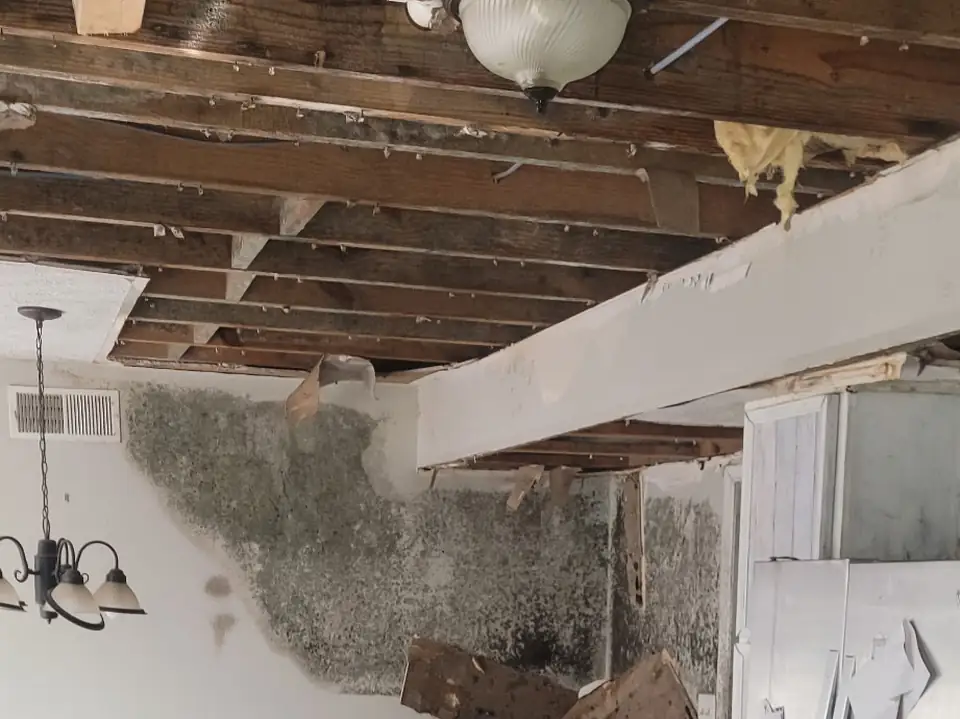
The other things that shape the job:
The CDC's Mold page says that for some people mold can cause a stuffy nose, sore throat, coughing or wheezing, burning eyes or skin rash. If your ceiling was wet for more than a couple of days, or you see dark spotting, mold testing tells you whether growth started above the drywall. Our guide on mold on the bathroom ceiling covers the spots that keep coming back after a fix.
Fresh Cleaning Solutions is open 24 hours a day, 7 days a week, with same-day service across Gwinnett, Forsyth, North Fulton and nearby counties. We are IICRC certified, every job is a flat rate quoted up front with no hidden fees.
Water dripping right now? Call (678) 609-8713, any hour. If the leak is stopped and you want it checked, book a free estimate.
Free estimate with any service. Flat rates quoted up front. No hidden fees.
FAQ
Yes. The stain is usually the smallest part of it. Insulation above the drywall holds water against the ceiling and framing, and the EPA says water-damaged areas should be dried within 24 to 48 hours to prevent mold growth. A ceiling that looks dry can still be wet above, so it should be checked with a moisture meter.
It is an emergency if water is actively dripping, the ceiling is sagging or water is near lights or fans. Turn off power to the room and keep people out from under the bulge. Fresh Cleaning Solutions answers water damage calls 24 hours a day, 7 days a week, with same-day service.
How long the ceiling stayed wet matters most. A leak dried the same day is often a small patch. One that sat for days can mean replacing insulation and drywall, and the EPA says wet ceiling tiles and insulation should be discarded and replaced. We give a free estimate and a flat rate quoted up front.
The most common causes are a failed toilet wax ring, cracked grout or caulk in the shower, a leaking shower pan, and dripping supply lines or drain joints. If the stain only appears after showers, the shower is the likely source. A plumber should fix the leak before the ceiling is repaired.
Only after the source is fixed and the material is confirmed dry. Paint hides the stain but not the water behind it. If the drywall is swollen or the seams have opened, the EPA says it should be removed and replaced rather than dried in place.
Related Services
24/7 water extraction and drying that stops wet floors and walls from turning into mold.
Learn more →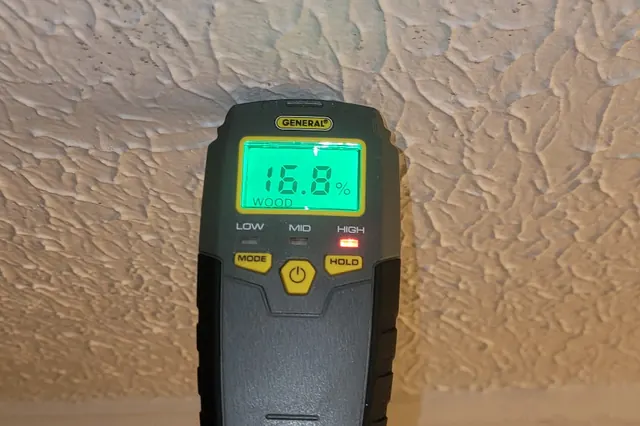
Air samples and a moisture check find hidden mold in walls, attics and ducts, with lab-backed results.
Learn more →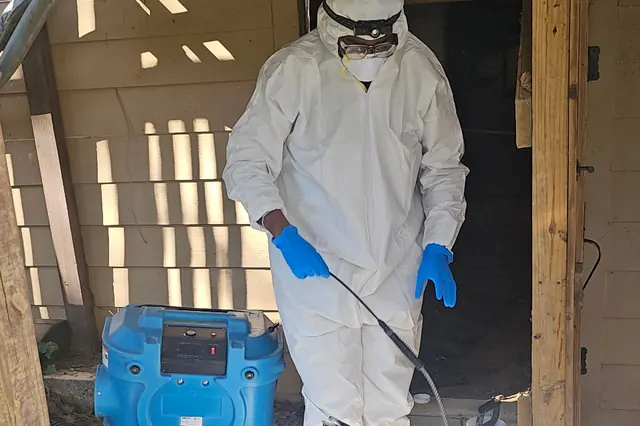
Contained, HEPA-filtered removal of mold growth, and the moisture behind it fixed so it stays gone.
Learn more →Keep Reading
October 31, 2026
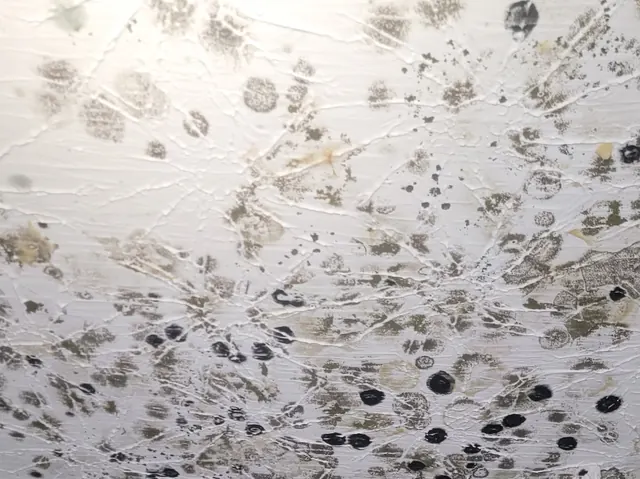
Mold on your bathroom ceiling keeps coming back? HVI says run the fan 20 minutes after every shower. Learn what removes it and what stops it for good.
Read the guide →October 24, 2026
How to test for mold in your house: look, measure moisture, then sample only when needed. The EPA says keep humidity under 60%. Here is the step-by-step way.
Read the guide →Book Online
Tell us your ZIP and what you need. We call back fast with your flat-rate quote, usually the same day.