
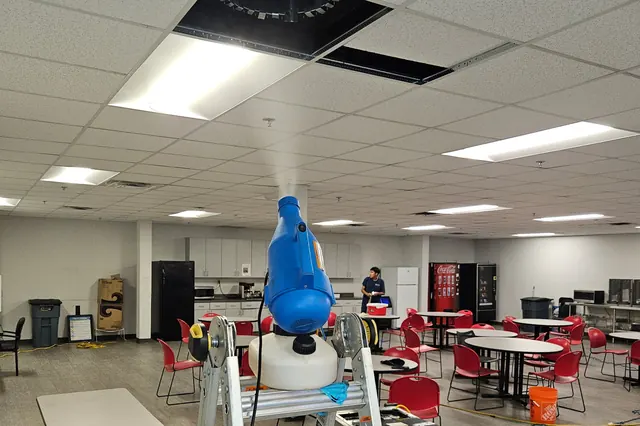
Duct Sanitizing & Odor Removal
EPA-registered sanitizer fogged through the system for pet, smoke and musty odors.
Learn more →Air Quality Guide · November 10, 2026
A musty smell when the heat kicks on almost always means moisture got into your HVAC system or ductwork over the summer. Here is how to find the source and fix it.
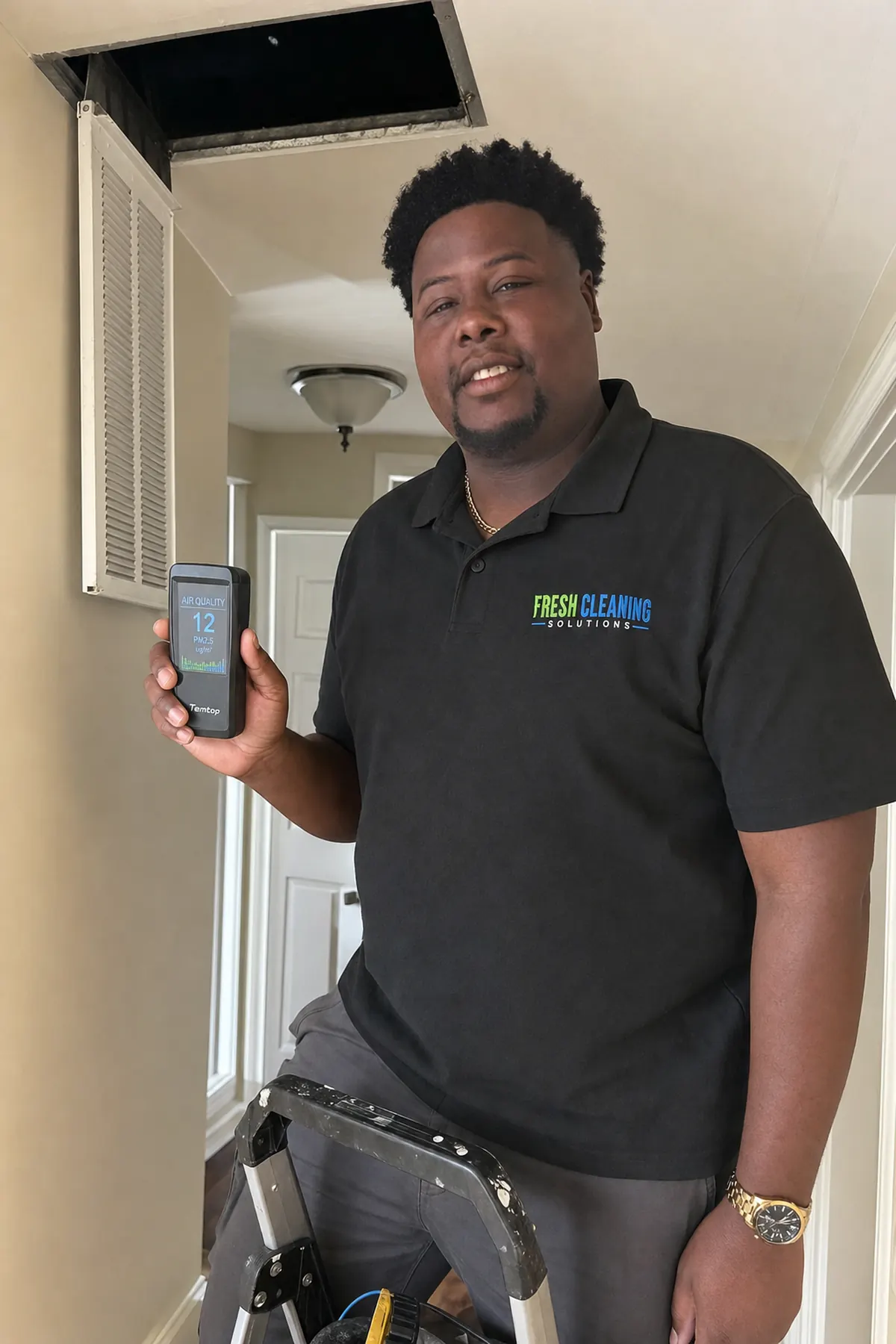
By David ThrowerOwner, Fresh Cleaning Solutions · NADCA certified · Suwanee, GA since 2016

Key Takeaways
A musty smell in your house when the heat comes on usually means moisture has fed mold or bacteria somewhere in your HVAC system, ductwork or crawl space. The furnace or heat pump warms that stale, damp air and blows it into every room at once, so a smell you never noticed in summer suddenly fills the house.
In 2023, UGA Extension put it plainly in its Mold and Moisture Home Inspection Checklist (Circular 1083): anywhere you smell a musty, earthy odor or see excess moisture, there is the potential for mold growth. The CDC's Mold page says the same thing from the health side. Mold can smell musty, and if you see or smell it, you should remove it.
Georgia makes this worse than most places. Our summers are long and humid, and the air conditioner pulls a lot of water out of that air. That water lands on the indoor coil, drips into a drain pan and runs out a condensate line. When any part of that path stays wet for months, it grows something. Then the first cold snap in November switches the system to heat, and you smell the result.
Start with the complete guide: mold in your house, how to spot it, test it and get rid of it.
A dusty, slightly burnt smell on the first day of heat is normal and should be gone within a day or so. A musty, wet basement or old gym bag smell that keeps coming back every time the heat runs is not normal. That one points to moisture and microbial growth.
The timeline is the easiest way to tell them apart. Dust that settled on the heat exchanger or heat strips over the summer burns off quickly, so the smell fades fast. Moisture-driven odors do the opposite. They show up every time the blower starts, they get stronger on damp, rainy days, and they do not fade with use. If you are still smelling it a week into heating season, stop waiting for it to go away.
| What you smell | Most likely source | What to do |
|---|---|---|
| Dusty or slightly burnt, first day only | Dust burning off the heat exchanger or heat strips | Change the filter and give it a day |
| Musty or earthy every time the blower runs | Damp coil, drain pan or duct lining | Coil cleaning and duct sanitizing |
| Dirty sock smell, mostly with a heat pump | Microbial growth on the indoor coil | Professional coil cleaning, consider UV |
| Musty all over the house, even with the system off | Damp crawl space or hidden water damage | Mold testing and moisture control |
| Musty in one room only | A leak, wet carpet pad or moldy wall near that room | Find and dry the water source |
If you ever smell gas, rotten eggs or a sharp electrical burning smell, that is a different problem. Shut the system off and call your gas company or an HVAC technician right away.
The most common source is the indoor evaporator coil and the drain pan under it. In its guide Should You Have the Air Ducts in Your Home Cleaned, the EPA notes that condensation on or near cooling coils is a major factor in moisture getting into the system, and that moisture should not be present in ducts at all.
In most North Atlanta homes the AC coil sits right on top of the furnace, so every bit of heated air passes through it. A coil that stayed wet all summer, packed with dust and pet hair, is a perfect place for growth. A drain pan that holds standing water or a slow condensate line adds to it. The EPA's duct guide specifically says to make sure the condensate pan drains properly. Our AC and evaporator coil cleaning takes care of the coil itself.
Plenty of Georgia homes run ductwork through hot attics or damp crawl spaces. When cold, conditioned air moves through ducts in a humid space, water can form on and inside the duct. The EPA says the presence of condensation or high relative humidity is an important indicator of the potential for mold growth on any type of duct. Once a duct holds odor, every heating cycle pushes it back out.
Heat pumps are common across Gwinnett and Forsyth, and they have their own version of this problem. The same indoor coil cools in summer and heats in winter, and in cold weather the system runs short defrost cycles that can wet the coil again. If the odor smells like old socks and shows up mostly when a heat pump starts, the coil is the first place to look.
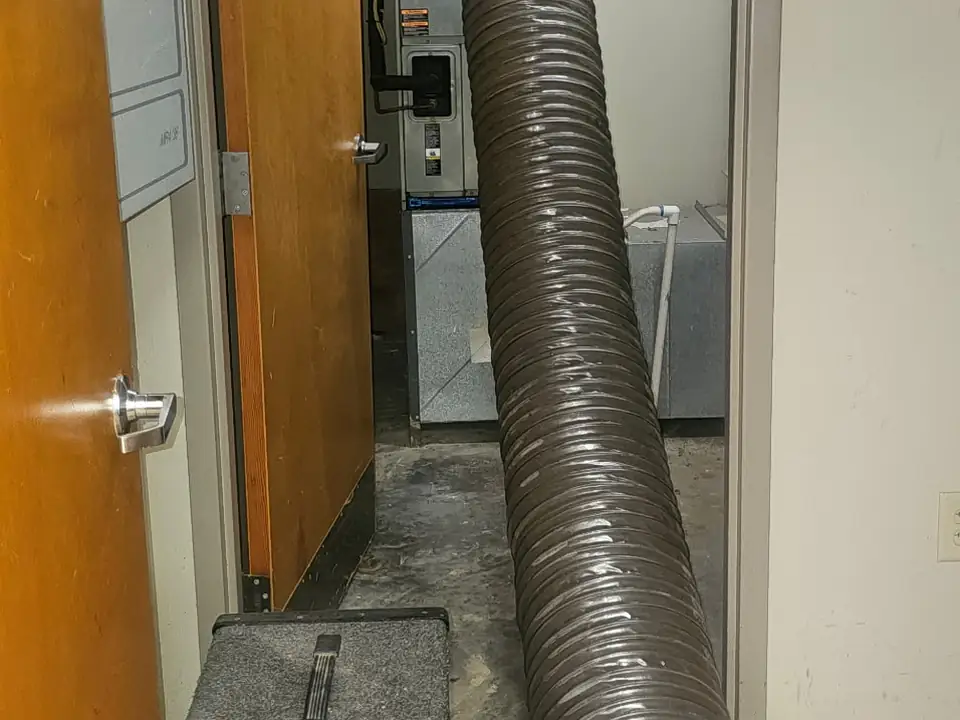
Yes, and in our area that is very common. The EPA's Brief Guide to Mold, Moisture and Your Home says hidden mold may be the cause when a building smells moldy but you cannot see the source. In a crawl space home, the air down there does not stay down there. It moves up into the living space and into returns.
In a lot of the Gwinnett and North Fulton crawl spaces we go into, the story is the same. Red clay soil that stays damp, a torn or missing vapor barrier, open foundation vents letting in humid summer air, and ductwork running right through the middle of it. Those homes often smell fine in July with the AC humming, then smell musty the first week the heat runs. The heat did not cause the problem. It just stirred it up.
UGA Extension's checklist says a crawl space should have, at a minimum, a 6 to 8 mil plastic vapor barrier covering the soil. Many older homes do not. If yours has standing water, wet insulation hanging from the floor joists or a strong earthy smell when you open the access door, that is your source. Crawl space encapsulation and a crawl space dehumidifier fix the moisture at the root.
Inside the house, check under sinks, around the water heater, behind the washing machine and along any ceiling that sits under a bathroom. A slow leak can soak drywall or carpet pad for weeks before you see a stain.
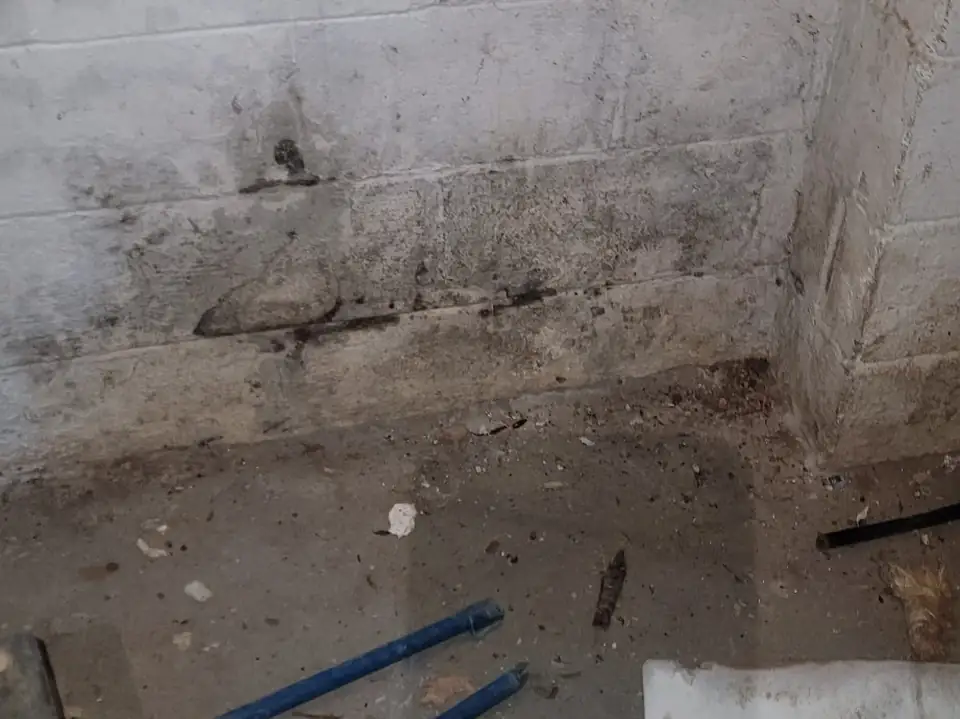
Fix the moisture first, then clean and sanitize the system. In its duct cleaning guide the EPA warns that if the conditions causing mold growth are not corrected, the growth will come back. Spraying a fragrance into the vents or swapping in a scented filter only covers the smell for a few days.
Call when the smell lasts more than a few days into heating season, comes back after you change the filter, or shows up with allergy symptoms in the house. The CDC notes that for some people, damp and moldy spaces can cause a stuffy nose, sore throat, coughing or wheezing, burning eyes or a skin rash.
The air in your home matters more than most people think. In its Report on the Environment, the EPA says Americans spend about 90 percent of their time indoors, and indoor levels of some pollutants are often 2 to 5 times higher than typical outdoor levels. A musty system blows that air at you every time the heat cycles on, all winter long.
Duct cleaning alone is not always the answer, and we will tell you that. If your ducts are clean but the coil is growing something, coil cleaning and sanitizing fix it. If the system is fine but the crawl space is wet, the fix is under the house. We find the source first, then do the job that actually stops the smell. If you are still deciding whether cleaning makes sense for your home, our guide on whether air duct cleaning is worth it walks through when it helps and when it does not.
Fresh Cleaning Solutions is NADCA certified and has served Gwinnett, Forsyth, North Fulton and the surrounding area since 2016. We are open 24 hours, 7 days a week, with same-day service available, flat rates quoted up front and no hidden fees. You can add a dryer vent cleaning to any air duct cleaning for $99.
Tired of the musty smell every time the heat kicks on? Call (678) 609-8713 or book a free estimate and we will find where it is coming from.
Free estimate with any service. Flat rates quoted up front. No hidden fees.
FAQ
A light dusty or burnt smell on the first day is normal. Dust that settled on the heat exchanger over the summer burns off and the smell fades within a day or so. A musty, damp smell is different. If it keeps coming back every time the blower runs, moisture has gotten into the system or the crawl space, and it will not go away on its own.
It can for some people. The CDC says damp and moldy environments can cause a stuffy nose, sore throat, coughing, wheezing, burning eyes or a skin rash in sensitive people. Others notice nothing. If anyone in your home has allergies or asthma and the smell started with heating season, get the system checked and consider mold testing.
It helps, and it is the right first step, but it rarely fixes the problem alone. The filter sits in front of the coil, drain pan and ducts, which is where moisture and growth usually live. If the smell is back within a few days of a new filter, the source is further inside the system or in the crawl space.
That odor is usually microbial growth on the indoor coil. The same coil stays wet all summer while cooling, then gets damp again during defrost cycles in cold weather. Dust and debris on the coil give the growth something to feed on. A professional coil cleaning and sanitizing usually solves it, and a UV light can help keep it from coming back.
We offer same-day service and are open 24 hours, 7 days a week. Most homes need one visit to find the source. A typical air duct cleaning takes 2 to 4 hours, and sanitizing is done during the same visit. If the source is a crawl space or hidden water damage, we will explain the fix and quote a flat rate up front.
Related Services
EPA-registered sanitizer fogged through the system for pet, smoke and musty odors.
Learn more →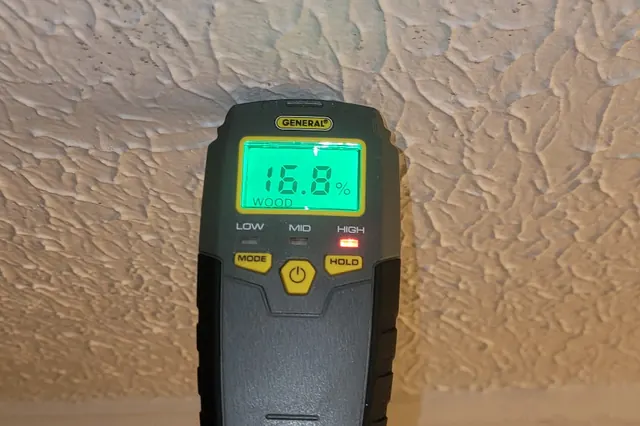
Air samples and a moisture check find hidden mold in walls, attics and ducts, with lab-backed results.
Learn more →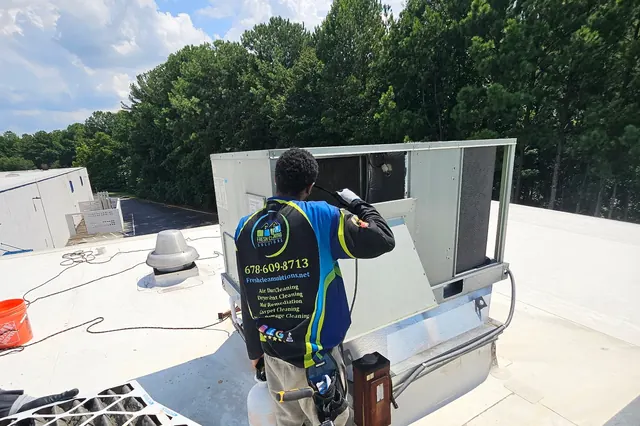
A clean coil cools faster, runs cheaper and stops the musty smell at the source.
Learn more →Keep Reading
November 7, 2026
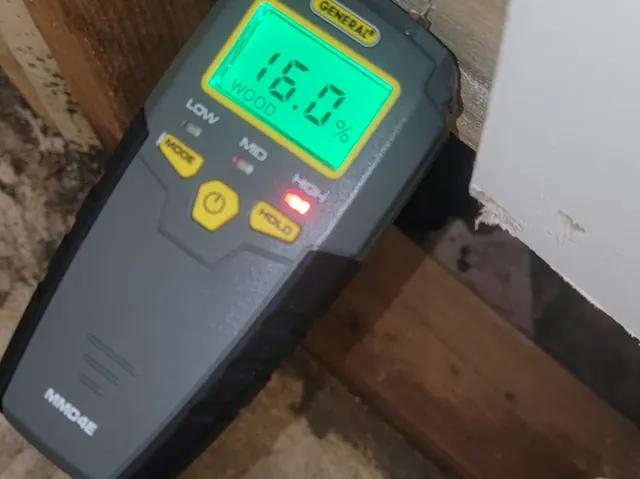
A mold smell in your house means moisture is feeding growth somewhere. The EPA says dry wet areas within 24 to 48 hours. Here is how to track the source.
Read the guide →
November 3, 2026
Is air duct cleaning worth it? EPA says yes for mold, pests or heavy dust, and indoor air can run 2 to 5 times dirtier than outside. Here is how to decide.
Read the guide →Book Online
Tell us your ZIP and what you need. We call back fast with your flat-rate quote, usually the same day.