
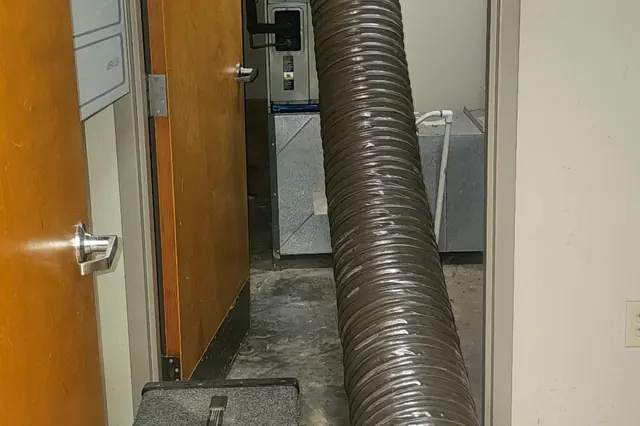
UV Lights & Air Purifiers
UV-C lamps and whole home purifiers that keep killing mold and bacteria after we leave.
Learn more →Air Quality Guide · November 21, 2026
A UV light for HVAC works best at one job: keeping mold and bacteria off the wet cooling coil and drain pan. Here is what it does, what it does not do and who should get one.
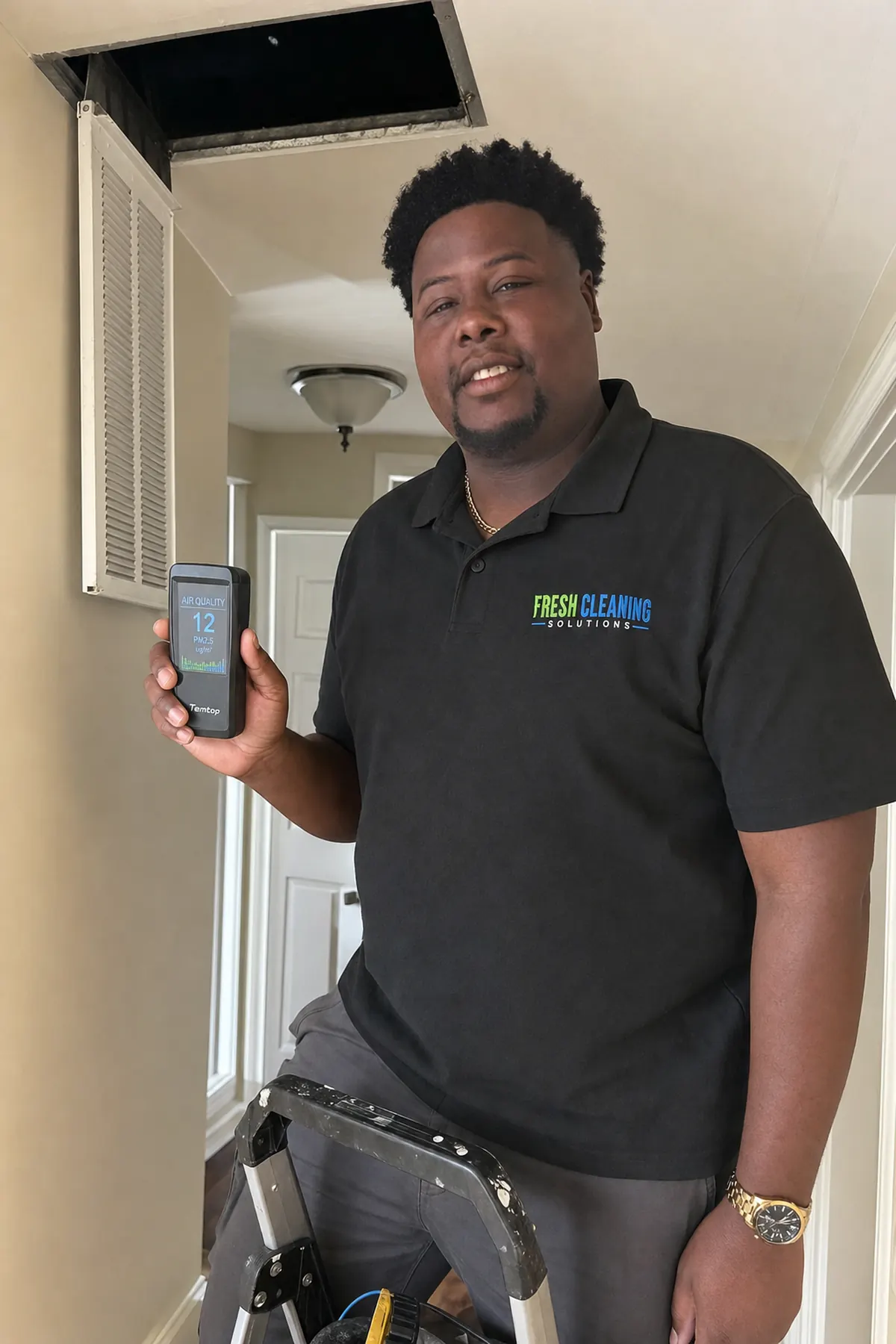
By David ThrowerOwner, Fresh Cleaning Solutions · NADCA certified · Suwanee, GA since 2016

Key Takeaways
A UV light for HVAC shines ultraviolet C light on the cooling coil, drain pan and nearby surfaces so mold and bacteria cannot grow on them. Those wet parts are where growth starts, so keeping them clean keeps your system from blowing musty air through every vent.
Here is why the coil matters. Every time your AC runs, warm air passes over the cold coil and water condenses on it. That water drips into a pan and drains away. A surface that stays damp and dark for months is a perfect home for mold.
The U.S. EPA spells this out in Residential Air Cleaners: A Technical Summary (3rd edition, 2018). It says fungal spores can grow inside HVAC systems when condensation forms on cooling coils, drain pans and internal insulation. It also says most home UV lamps are low-pressure mercury lamps that give off UV-C light mainly at 254 nanometers, a wavelength shown to kill germs.
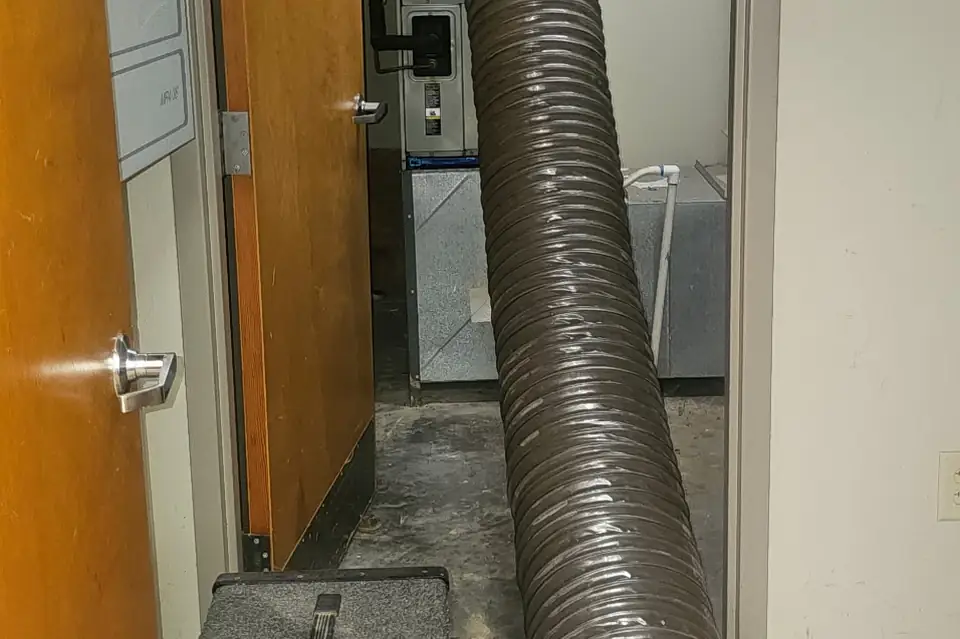
Light at that wavelength damages the DNA of mold and bacteria so they cannot reproduce. Mounted inside the air handler and aimed at the coil, the lamp works around the clock on the spot that needs it most. Our UV lights and whole-home air purifiers are installed right where that coil sits.
Yes, for the coil and drain pan. Much less for the air itself. The EPA's 2018 technical summary cites a study that found a 99 percent reduction in microbes growing on exposed HVAC surfaces, but a drop in airborne bacteria of only 25 to 30 percent. The difference comes down to time under the light.
A coil sits under the lamp all day and night. Air rushing through the duct gets a split second of light. The EPA says reliably killing spores takes exposure on the order of minutes or hours, not the few seconds typical of most UV air cleaners.
So the honest answer is simple. A UV light is a coil and drain pan protector first. It is not a whole-house air sterilizer, no matter what the box says.
That is also why we do not sell UV as an allergy cure. The EPA notes that dead mold and bacteria particles can still trigger allergies, and that UV does not capture or remove particles. What UV does well is stop the coil from becoming a source in the first place. For the particles already floating around, you need filtration.
There are three, and all of them are manageable with the right lamp and a proper install. The EPA's 2018 summary lists ozone from uncoated lamps, possible eye injury and the fact that UV inactivates germs but does not remove them. Here is how each one plays out in a real home.
| Downside | Why it happens | How we handle it |
|---|---|---|
| Ozone | Uncoated UV-C lamps at 254 nm and below can turn oxygen into ozone, a lung irritant | Coated, ozone-free lamps only |
| Eye exposure | Direct UV-C light can injure eyes | Lamp mounted inside the closed air handler, never in the living space |
| Does not catch dust | UV changes germs, it does not trap particles | Pair it with a good filter and a clean coil |
| Weaker over time | Lamp output fades and dust on the bulb blocks light | Clean the bulb and replace it on schedule |
Ozone deserves a closer look. The EPA's page Ozone Generators that are Sold as Air Cleaners says that relatively low amounts of ozone can cause chest pain, coughing, shortness of breath and throat irritation. Its Guide to Air Cleaners in the Home warns that UV lights without adequate lamp coatings may give off ozone. That is why the lamp choice matters more than the brand name.
The EPA also says UV should be used in addition to, not instead of, regular filtration. Its home air cleaner guide recommends a filter rated at least MERV 13, or as high as your system can handle.
Yes. A UV light keeps a clean coil clean, but it will not scrub off years of buildup. The EPA's 2018 summary says UV is ineffective when microbes grow inside filter media, crevices or porous insulation, because the light cannot reach them. Thick dirt on a coil hides growth the same way.
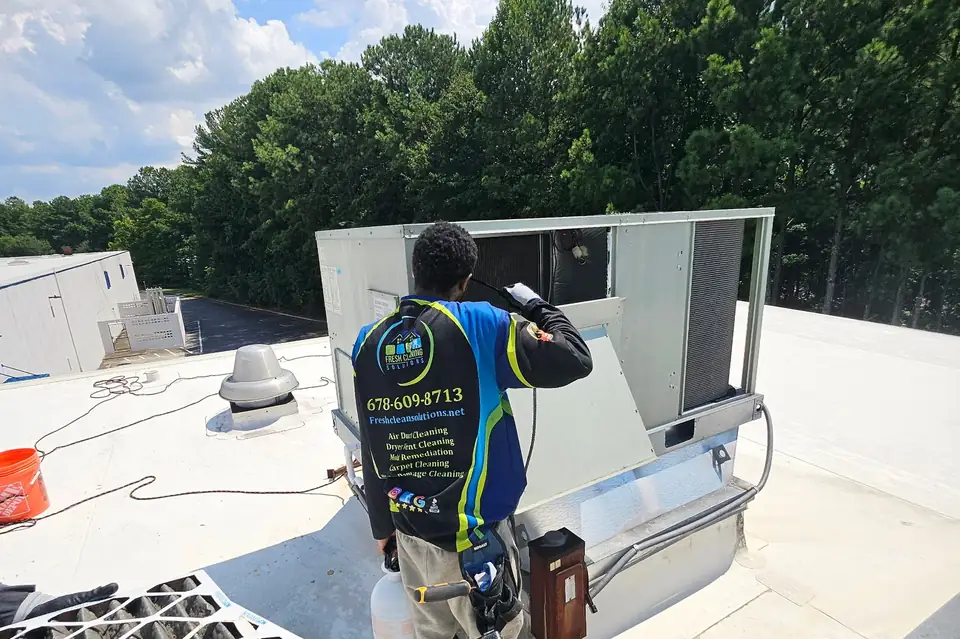
A clean coil pays off in more than cleaner air. The same EPA report notes that limiting growth on cooling coils improves heat transfer, which improves energy efficiency. A matted coil makes your system run longer to cool the house.
In a lot of the North Atlanta air handlers we open, the coil has a gray or green film and the drain pan holds standing water with slime in it. Putting a UV light on top of that would be like turning on a lamp in a dirty room. That is why our crew does AC and evaporator coil cleaning first, then mounts the light so it starts on a clean surface.
If your house already smells musty when the system kicks on, start with our guide on why your house smells musty when the heat comes on. If you see growth or smell mold, book mold testing before anything else.
Homes where the coil stays wet for long stretches get the most out of a UV light. Georgia's long, humid cooling season means the AC in many North Atlanta homes runs from spring well into fall. The EPA recommends keeping indoor humidity below 60 percent, ideally 30 to 50 percent, in its Brief Guide to Mold, Moisture and Your Home.
Johns Creek is a good example of who asks us about UV. The city runs along 13.5 miles of the Chattahoochee River on its southern edge and grew up around a technology park that started in 1981, with neighborhoods filling in around it before the city incorporated in 2006. Many of those homes now have air handlers that have run through decades of humid summers. Our UV light and air purifier installs in Johns Creek usually start with a look at the coil.
Most HVAC UV bulbs are made to run around the clock and are typically replaced about once a year, following the maker's schedule. The EPA's 2018 summary says regular maintenance is crucial and usually means cleaning dust off the lamps and replacing old lamps. A bulb can still glow blue after its germ-killing output has faded, so the glow alone is not proof it is working.
What shapes the job is your equipment, not a sticker price. Things we look at:
You get a free estimate and a flat rate quoted up front, no hidden fees. Fresh Cleaning Solutions has served North Atlanta since 2016, is NADCA and IICRC certified, holds 4.9 stars from 501 Google reviews.
Want a cleaner coil and a UV light that keeps it that way? Call (678) 609-8713, open 24 hours with same-day service available, or book a free estimate.
Free estimate with any service. Flat rates quoted up front. No hidden fees.
FAQ
It shines UV-C light on the cooling coil and drain pan so mold and bacteria cannot grow on those wet surfaces. The U.S. EPA's 2018 technical summary cites a study that found a 99 percent drop in growth on exposed HVAC surfaces. That keeps the system from spreading musty air and helps the coil transfer heat.
Not much on its own. Air passes the lamp in a split second, and the EPA's 2018 summary cites only a 25 to 30 percent drop in airborne bacteria in the same study. UV also does not catch dust or pollen. For the air itself, pair it with a filter rated MERV 13 or higher, or a whole-home air purifier.
Some do. The EPA says uncoated UV-C lamps at 254 nanometers and below can create ozone, a lung irritant that can cause coughing and chest pain at relatively low levels. Coated lamps are made to block that. Fresh Cleaning Solutions installs ozone-free coated lamps mounted inside the air handler, out of the living space.
Plan on about once a year, or on the schedule the lamp maker sets. UV bulbs lose strength over time even while they still glow, and dust on the bulb blocks light. The EPA says regular maintenance is crucial and usually means cleaning dust off the lamps and replacing old ones.
Yes. UV keeps a clean coil clean but will not remove thick buildup. The EPA notes UV light cannot reach microbes growing inside porous material or crevices. Cleaning the coil first lets the light work on a bare surface, and the EPA says limiting growth on coils also improves heat transfer and energy efficiency.
Related Services
UV-C lamps and whole home purifiers that keep killing mold and bacteria after we leave.
Learn more →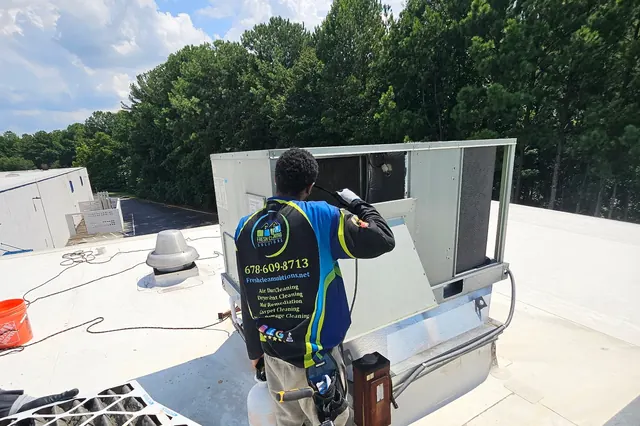
A clean coil cools faster, runs cheaper and stops the musty smell at the source.
Learn more →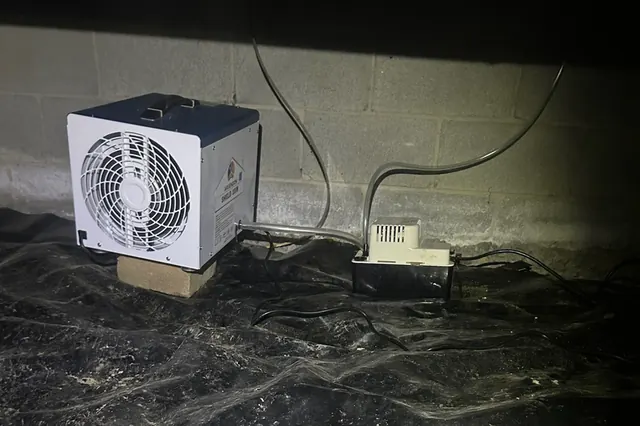
Georgia humidity feeds mold and dust mites. We install systems that hold it at 45 to 50%.
Learn more →Keep Reading
November 10, 2026
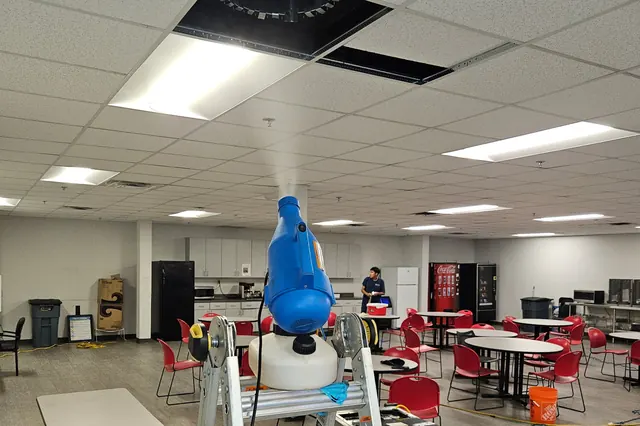
Musty smell in your house when the heat kicks on? The EPA says to keep indoor humidity under 60%. Learn the real causes in Georgia homes and how to fix them.
Read the guide →Book Online
Tell us your ZIP and what you need. We call back fast with your flat-rate quote, usually the same day.