
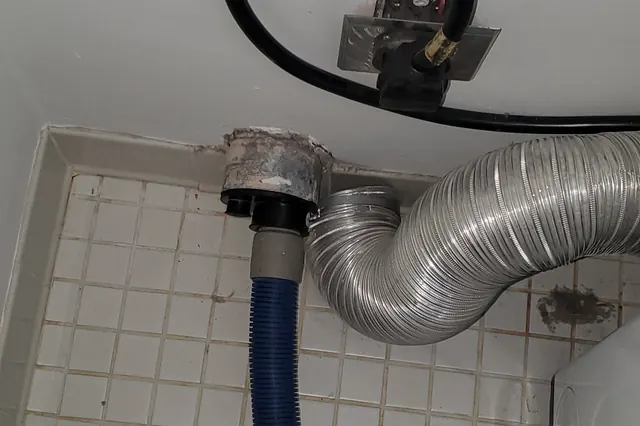
Dryer Vent Repair & Installation
Crushed, disconnected or too-long vent runs rebuilt with rigid metal duct and a new exterior hood.
Learn more →Air Quality Guide · November 28, 2026
A dryer vent is a short list of rules: rigid metal, a short path, few turns and an exit outside. Get those right and the dryer runs faster, safer and longer.

By David ThrowerOwner, Fresh Cleaning Solutions · NADCA certified · Suwanee, GA since 2016

Key Takeaways
Installing a dryer vent the right way means running 4 inch rigid metal duct by the shortest, straightest path to a hood on the outside of the house, with joints taped and fastened and no screws sticking into the airflow. The foil hose behind most dryers is the part that fails first, and the part most worth replacing.
The rules come from the building code. The 2018 International Residential Code, published by the International Code Council and adopted in Georgia, sets them out in Section M1502, Clothes Dryer Exhaust. It says dryer exhaust must be independent of all other systems and must carry the moisture to the outdoors. The duct must be 4 inches in diameter, made of metal at least 28 gauge, with a smooth interior finish.
Why so strict? Because a bad vent is a fire risk. In 2020, the National Fire Protection Association reported in Home Dryer Fires that U.S. fire departments responded to an average of 13,820 home dryer fires a year from 2014 to 2018, and that one third of them were caused by a failure to clean. A vent that is long, crushed or full of turns fills with lint faster, so the install sets the pace for every cleaning after it.
Already seeing slow drying or a hot laundry room? Read our guide to dryer vent fire warning signs before you change anything.
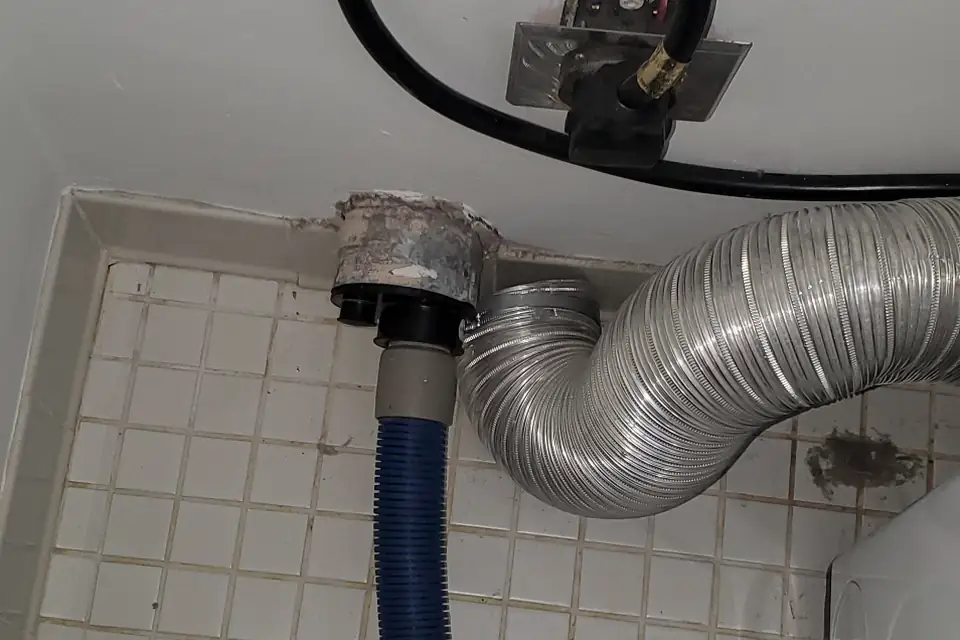
In 2018, the International Code Council's International Residential Code capped the dryer exhaust duct at 35 feet and made every fitting count against that limit. Its Table M1502.4.5.1 counts a mitered 90 degree elbow as 5 feet of duct and a mitered 45 degree elbow as 2 feet 6 inches. Smooth, long-radius elbows count for less. The dryer maker's instructions can allow a different length, so read them first.
| Part of the vent | What the code asks for | What we often find instead |
|---|---|---|
| Duct | 4 inch metal, smooth inside, at least 28 gauge | Plastic or foil accordion hose |
| Joints | Sealed and fastened, screws no deeper than 1/8 inch | Long screws that catch lint |
| Transition hose | 8 feet or less, never hidden in a wall | Long hose pushed into the wall cavity |
| Length | 35 feet, minus fittings, unless the dryer maker allows more | Long attic runs with many turns |
| Exit | Outside the building, 3 feet from openings, no screen | Screened hoods, or ducts left open in an attic |
Source: International Code Council, 2018 International Residential Code as adopted in Georgia, Section M1502.
Yes. Code allows 90 degree turns, but each one shortens the run you are allowed. Use as few as you can, and pick smooth-radius elbows over sharp mitered ones. The turn right behind the dryer is where foil hose usually kinks, so a rigid or semi-rigid metal elbow there helps the most.
Here is the part most guides skip. The length rule is not only about fire safety. Every extra foot and every turn slows the air, and slow air drops lint sooner. A vent that is legal at 34 feet will still fill faster than one at 12 feet. When we plan a new route, we treat the 35 foot limit as a ceiling, not a target.
For a dryer on an outside wall with a short, straight run, this is a reasonable weekend job. The U.S. Consumer Product Safety Commission's safety alert Overheated Clothes Dryers Can Cause Fires advises replacing plastic or foil accordion duct with rigid or corrugated semi-rigid metal duct, since most manufacturers specify it for maximum airflow. Here is the order we follow.
Where nails or screws could hit a duct inside a wall, the code calls for steel shield plates over it. That detail alone is a good reason to call a pro for any run that goes inside finished walls.
No. In 2018, the International Code Council's International Residential Code Section M1502.3 said plainly that exhaust ducts shall terminate on the outside of the building. A crawl space, attic or garage does not count. The U.S. Environmental Protection Agency's A Brief Guide to Mold, Moisture and Your Home also says to vent clothes dryers to the outside.
The reason is simple. A full load of wet clothes can hold as much as one and a half gallons of water, according to the U.S. Fire Administration's 2012 report Clothes Dryer Fires in Residential Buildings. Blow that into a North Georgia crawl space, which is already humid most of the summer, and you are feeding mold and wood rot under the floor. Add a layer of lint on the joists and you have fuel sitting next to wiring.
On the crew's side, the disconnected attic vent is one of the most common finds in North Atlanta homes with upstairs laundry. The duct slips off the roof cap or a joint pulls apart, and nobody notices because the dryer still runs. The tell is a damp, linty patch of insulation around the break.
A roof dryer vent is a low metal cap with a hinged damper that opens when the dryer blows. It should have no screen or mesh, which traps lint. Roof exits show up on two-story homes with upstairs laundry, and they make long vertical runs that lint has to climb, so they clog faster and are hard to reach safely.
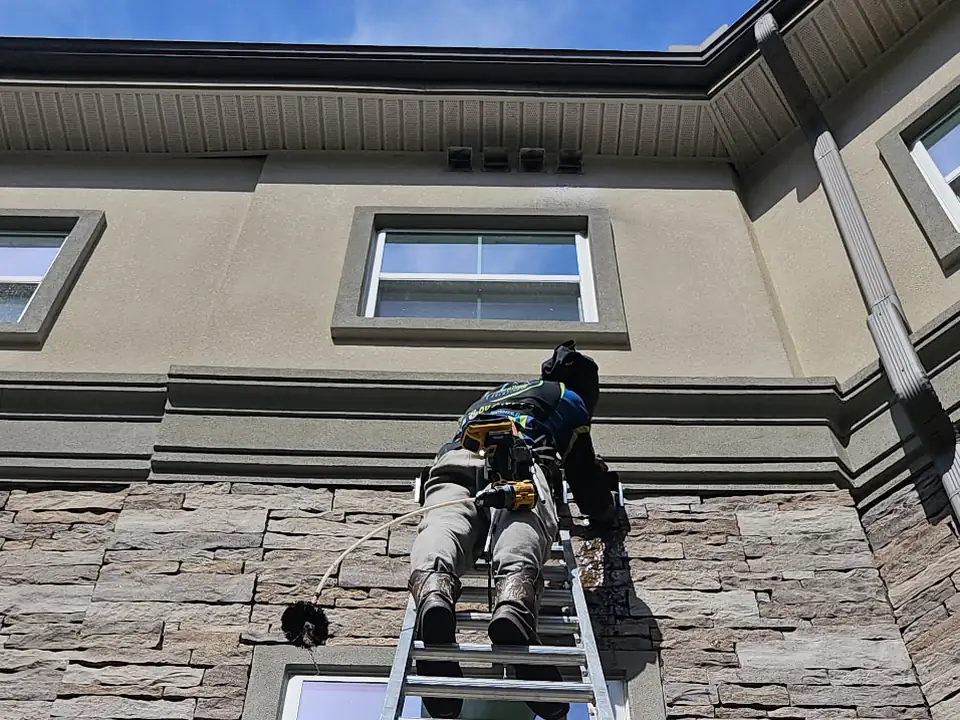
Call a pro when the run is long, goes through finished walls or between floors, or exits through the roof or a second-story wall. The same goes for any duct that is crushed, foil or plastic inside a wall. Those are the jobs where a mistake gets sealed in, and NFPA's Clothes Dryer Safety tip sheet advises having your dryer installed and serviced by a professional.
Johns Creek is a good example of why. Its growth took off after 1981, when Technology Park/Johns Creek was laid out on farmland near McGinnis Ferry and Medlock Bridge Roads, and the area grew to about 60,000 people before it became a city in 2006. That means a lot of homes here have dryer lines that are now decades old, often running through attics and upper floors. If yours is one of them, our team handles dryer vent repair in Johns Creek and across North Fulton.
Our dryer vent repair and installation service replaces bad duct with rigid metal, shortens the route where the house allows it, and fits a hood that opens freely. Then we run the dryer and check the flow outside before we leave. If the line is sound but full, dryer vent cleaning takes about an hour for most homes.
Every job is a flat rate quoted up front, with no hidden fees. Call (678) 609-8713 or book a free estimate. We are open 24 hours, 7 days a week, with same-day service available.
Free estimate with any service. Flat rates quoted up front. No hidden fees.
FAQ
Yes. The International Residential Code allows 90 degree elbows, but a mitered one counts as 5 feet against the 35 foot limit, so each turn shortens the run you can use. Keep turns to a minimum and choose smooth, long-radius elbows. The turn right behind the dryer should be metal so it cannot kink.
No. Code requires dryer exhaust to end outside the building. A load of wet clothes can hold about a gallon and a half of water, and blowing that into a Georgia crawl space feeds mold and wood rot. Lint also builds up on the framing. Run the vent to an outside wall or roof cap instead.
It is a low metal cap with a hinged damper that lifts when the dryer runs. It should not have a screen. Roof exits mean long vertical runs, so lint builds up faster and the cap needs regular checks. Because of the height and the roof, cleaning and repair are best left to a pro.
The route drives the job: how far the dryer sits from an outside wall, how many turns the duct needs, whether it runs through finished walls or an attic, and whether it exits through the roof or a second story. Fresh Cleaning Solutions gives a free estimate and a flat rate quoted up front, with no hidden fees.
Foil accordion hose is a poor choice and is never allowed inside walls. The CPSC recommends rigid or semi-rigid metal duct because foil and plastic trap lint and crush easily. Code allows a listed transition duct of 8 feet or less between the dryer and the wall, kept out in the open.
Related Services
Crushed, disconnected or too-long vent runs rebuilt with rigid metal duct and a new exterior hood.
Learn more →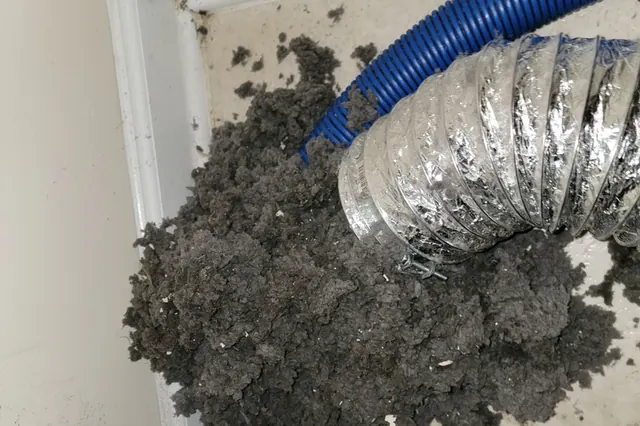
Lint out, airflow back, fire risk down. $99 with any air duct cleaning.
Learn more →Keep Reading
October 27, 2026
Dryer vent fire signs to act on now. NFPA says 32% of home dryer fires come from failure to clean. Learn the 9 warnings and what to do in North Atlanta homes.
Read the guide →Book Online
Tell us your ZIP and what you need. We call back fast with your flat-rate quote, usually the same day.